

When winter settles over Southwestern Ontario, heavy ice storms and wet snow regularly threaten the electrical grid. A residential home backup system offers incredible peace of mind, but sub-zero temperatures present severe operational challenges to mechanical systems. Knowing how to prepare a standby generator for winter keeps your family warm and secure when severe weather cuts utility power.
Cold weather places extreme stress on starting batteries, thickens engine lubricants, and creates physical hazards around outdoor air intakes. Taking proactive steps in late autumn ensures your automatic backup system activates instantly when the grid drops out.
Protect Your Starting Battery from Deep Freezes
A dead battery accounts for the majority of generator failure calls during winter power outages. As temperatures drop below freezing, a standard lead-acid battery loses approximately 30 to 50 percent of its cranking capacity. At the same time, cold engine oil requires significantly more power to turn over the crankshaft.
If your unit features an aging battery, the initial voltage spike required to ignite the engine might drop below operational thresholds. This leaves your home without power during an active storm.
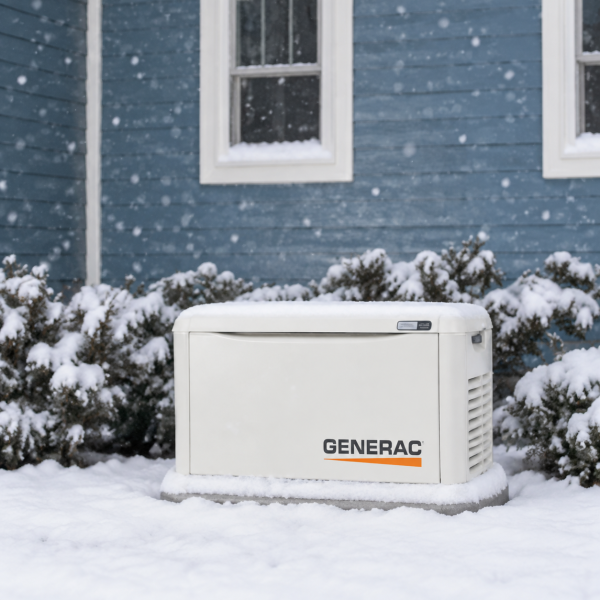
Installing Battery Warmer Pads and Oil Heaters
Installing a thermostatically controlled cold-weather kit resolves low-voltage starting issues completely. These kits feature a heated pad that sits directly beneath the battery, maintaining an ideal internal chemical temperature regardless of ambient weather conditions.
Pairing a battery warmer with an oil-slip heater ensures that vital fluids remain fluid. These heating elements draw minor standby power from your home circuits and automatically activate whenever ambient temperatures drop below 4 degrees Celsius.
Switch to Synthetic Engine Oil for Cold Weather Starts
Conventional engine oil thickens significantly when exposed to prolonged Ontario freezing spells. When an automated backup unit attempts to start with gelled oil, the internal friction creates severe mechanical strain, potentially damaging engine bearings or triggering low-oil pressure shutdown safety switches.
Transitioning your engine lubricant to full synthetic oil before the first freeze provides immediate fluid circulation across critical engine components upon startup.
Fluid Viscosity and Filter Replacement Guidelines
Most major standby manufacturers recommend 5W-30 synthetic oil for full-spectrum winter performance. Synthetic blends maintain consistent viscosity across radical temperature swings, allowing the engine to reach its full operating RPM rapidly.
Always replace the engine oil filter simultaneously during your pre-winter service. Trapped moisture or debris inside an old filter can freeze, restricting oil flow and causing irreversible engine damage during a sudden power outage.
Prevent Snowdrift and Air Intake Blockages
Heavy snowfall and drifting wind create direct physical hazards for outdoor electrical equipment enclosures. Air-cooled standby systems draw immense volumes of fresh air through exterior louvers to keep internal combustion engines from overheating.
When severe blizzards pile snow against the sides of an enclosure, the engine starves for oxygen. This restriction causes incomplete fuel combustion, system stalling, or dangerous carbon monoxide buildup around the residential perimeter.
Maintaining Clear Clearance Parameters Around the Enclosure
Establish a strict 3-foot clearing zone around all four sides of your standby unit. Clear away dried autumn leaves, fallen branches, and tall grass before the ground freezes solid.
After every major snowfall event, inspect the enclosure to clear away ice buildup and drifted snowbanks. Never allow snow to cover the top exhaust louvers or accumulate higher than the bottom structural frame. For safety context on managing backup power hardware safely around homes, review these portable power generators insights regarding residential power reliability.
Verify Automated Weekly Exercise Cycles
Standby systems rely on automated exercise cycles to lubricate internal engine components, charge the starting battery, and run self-diagnostic checks. These self-tests typically run once a week for 5 to 12 minutes.
During warm summer months, minor operational glitches might go unnoticed. However, ignoring exercise cycle errors in autumn leaves your backup equipment unprepared for winter grid disruptions.
Updating Firmware and Testing Under Simulated Load
Check the digital controller interface beneath the enclosure lid to confirm that no diagnostic fault codes are present. Verify that the scheduled exercise day and time align with your household routine so you can actively hear the unit running.
If your system connects to a mobile monitoring application, confirm that Wi-Fi connectivity remains active. Remote monitoring alerts you instantly if a cold-weather fault occurs, allowing you to address repairs long before a storm strikes.
Inspect Fuel Lines and Gas Pressure Standards
Home backup units run primarily on natural gas or liquid propane supplies. Cold weather affects gas line pressure, particularly with propane tanks where lower temperatures reduce internal vaporization rates.
A drop in fuel line pressure causes the engine to run lean, resulting in rough idling, engine surging, or unexpected system shutdowns under heavy electrical loads.
| Fuel Type | Winter Temperature Impact | Pre-Winter Inspection Focus |
| Natural Gas (NG) | Minor pressure fluctuations from regional utility demand spikes | Flexible hose integrity, valve position, shutoff clearance |
| Liquid Propane (LP) | Decreased tank pressure as ambient temperatures plunge below -10°C | Tank fuel levels (maintain above 30%), regulator frost insulation |
Checking Natural Gas and Liquid Propane Connections
Examine all exposed flexible gas lines entering the unit for signs of wear, cracking, or surface corrosion. Ensure shutoff valves remain fully functional and easily accessible through deep snow.
If your system runs on liquid propane, keep the main storage tank filled above 30 percent total capacity throughout the winter. Low tank levels combined with sub-zero temperatures impair gas flow, leaving your unit unable to support your home’s total electrical load.
Work with a Licensed Electrical Contractor for Winter Safety
While home residents can easily handle routine snow clearing and visual enclosure inspections, internal high-voltage electrical components demand professional care. Hiring a Licensed Electrical Contractor ensures your system complies with all regional safety standards while operating at peak efficiency.
An certified professional evaluates delicate control wiring, tests transfer switch contactors, and verifies that ground connections remain secure beneath frozen soil conditions. To learn more about full-spectrum residential electrical care, explore our complete residential electrical services.

Transfer Switch Load Testing and ESA Compliance
The Automatic Transfer Switch (ATS) serves as the brain of your backup power system, isolating your home from the main utility grid during blackouts. If the ATS mechanical contactors stick due to dust or temperature degradation, the system will fail to transfer emergency power to your home panel.
During an annual maintenance visit, an electrician performs a simulated utility outage to confirm seamless switch activation. They also test voltage output under load to protect sensitive household electronics, heat pumps, and medical devices. To review hardware options or schedule a system tune-up, visit our dedicated Generac generator service guide.
FAQs
How often should I change the oil in my standby generator during winter?
Change the engine oil once a year or every 100 operating hours during extended power outages. If your unit runs continuously during a multi-day storm, check the oil level daily and top it up with 5W-30 synthetic oil as needed.
Do I need a cold weather kit for my standby generator in Ontario?
Yes, installing a cold-weather kit is highly recommended in Southwestern Ontario. The combination of a battery warmer pad and oil heater prevents cold-start mechanical strain when ambient temperatures fall below 4 degrees Celsius.
Can snow around my generator cause carbon monoxide hazards?
Yes, drifted snow blocking enclosure vents forces exhaust fumes to back up, creating severe carbon monoxide hazards around your home. Always keep a 3-foot perimeter cleared around your standby equipment.
Why does my generator exercise cycle fail in cold weather?
Exercise cycle failures in winter are usually caused by low battery voltage or gelled engine oil. Installing a battery warmer pad and switching to synthetic oil resolves most cold-weather starting faults.