Opening your monthly utility statement in London, Ontario, can feel like a punch to the gut. Between the “Time-of-Use” peaks and the ever-climbing delivery fees, many homeowners feel they have no control over their costs. The reality is that the way we use electricity in 2026 has changed. Traditional energy-saving tips like turning off the lights are no longer enough to move the needle on a modern bill.
To see a real difference, you need to address how your home interacts with the grid. Modern electrical systems allow for precision control that was impossible even five years ago. By focusing on specific, high-impact changes, you can stop the drain and keep more money in your pocket.
The Hidden Costs Behind Your Ontario Hydro Bill
Most of the frustration with Ontario hydro bills stems from the complexity of the “Delivery Fee.” This charge is often tied to your peak demand—the highest amount of electricity you use at once. Even if you use less total energy, hitting high peaks during the day can keep your bill inflated.
Then there is “Phantom Power.” This is the “Silent Drain” caused by devices that stay in standby mode. Your coffee maker, game consoles, and even your microwave are constantly pulling small amounts of current. Over a year, these tiny leaks add up to hundreds of dollars in wasted electricity.
1. Attack “Phantom Power” with Smart Energy Monitors
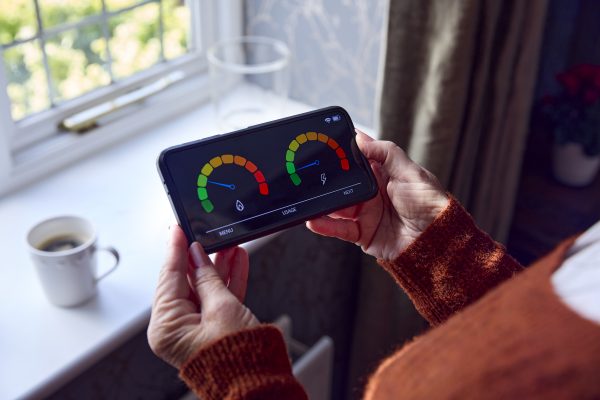
The first step to lower your hydro bill in Ontario is seeing exactly where the money goes. A smart home energy monitor is a device installed inside your electrical panel. It uses sensors to identify the unique “electrical signature” of every appliance in your home.
Once installed, you can see on your phone exactly how much it costs to run your dryer or how much power your old basement fridge is wasting. This data is eye-opening. Most homeowners find that 10% to 15% of their bill is caused by devices they aren’t even using. Smart monitors allow you to set alerts and automate “kill switches” for non-essential electronics when you leave the house.

2. Whole-Home Surge Protection for Expensive Efficiency
It may seem counterintuitive to install a surge protector to save money on your bill. However, efficiency and protection go hand-in-hand. Modern energy-efficient appliances, like variable-speed furnace motors and smart fridges, are packed with sensitive circuit boards. These boards are highly susceptible to “micro-surges” from the Ontario grid.
A micro-surge doesn’t blow a fuse, but it does degrade the efficiency of your motors over time. A motor that is slightly damaged by a surge has to work harder and pull more current to achieve the same result. By installing whole-home surge protection at the main panel, you ensure your high-efficiency investments actually stay efficient for their entire lifespan.
3. Strategic LED Retrofits and Lighting Automation
Many people have already swapped out their old incandescent bulbs for LEDs. But in 2026, the technology has moved toward integrated smart lighting. Standard LEDs are better than old bulbs, but they still waste energy if they are left on in empty rooms.
Smart lighting retrofits involve installing dimmable, motion-sensing switches that communicate with your home’s central hub. This eliminates the human error of leaving lights on. Furthermore, dimming an LED by just 20% is barely noticeable to the human eye but results in immediate energy savings. If your home still has older pot lights or fluorescent shop lights in the garage, a professional retrofit is one of the fastest ways to see a ROI.
4. Managing Energy Efficient Electrical Upgrades with Smart Panels
As you add more energy efficient electrical upgrades to your home, like heat pumps or EV chargers, your old electrical panel might struggle to keep up. A “Smart Panel” or a smart load center is the ultimate upgrade for energy management. These panels allow you to prioritize which circuits get power during different times of the day.
For example, you can program the panel to disable your water heater or EV charger during the “On-Peak” afternoon hours when rates are highest. This “peak shaving” technique is the most effective way to lower the “Delivery” portion of your bill. While these systems are advanced, you may find that you don’t always need a full service increase. You can learn more about how you might not need a panel upgrade if you use smart load shedding effectively. However, for many London homes, a physical panel upgrade is the foundation needed to support these new technologies safely.
5. Optimizing for Ultra-Low Overnight Rates
Ontario now offers an “Ultra-Low Overnight” rate plan designed for people who can shift their heavy usage to the middle of the night. This rate is significantly cheaper than standard off-peak prices, but it comes with a trade-off: much higher prices during the late afternoon.
To make this work, you need an electrical system that can “set and forget.” This involves installing heavy-duty timers or smart controllers for your largest loads, such as:
- Electric Vehicle Chargers
- Electric Water Heaters
- Pool Pumps and Heaters
- Dishwashers and Laundry Suites
If you try to manage this manually, you will eventually fail and end up paying the high peak prices. A professional electrician can wire these devices into a central management system that ensures they only run when the price is at its lowest.
Stop the “Delivery Fee” Frustration
The delivery fee is based on how much stress you put on the local grid. If you run your dryer, stove, and AC all at the same time, your “peak demand” is high. By using load-sequencing technology, you can ensure these large appliances never run simultaneously.
Smart home complexity is a common fear, but modern systems using the “Matter” protocol have made this much simpler. You no longer need ten different apps. A single interface can manage your lights, your car charger, and your HVAC system to ensure your home stays under a specific power threshold. This keeps you in the lowest possible billing tier and reduces the “Regulatory” charges on your statement.
Professional Installation: The Key to Real Savings
DIY energy saving often leads to “Smart Home Complexity” where nothing works together. A licensed electrician doesn’t just swap out a breaker; they look at the entire “ecosystem” of your home. We ensure that your grounding is sufficient for surge protection and that your panel can handle the specific draws of modern heat pumps.
Lowering your hydro bill is about playing the long game. The goal is to create a home that is “set and forget”—one that automatically seeks out the cheapest power and protects its own components from damage. If you are ready to take control of your utility costs, contact us for a home energy consultation. We can walk through your current setup and identify which of these five upgrades will provide the fastest payback for your specific lifestyle.
FAQs
How much can I actually save with a smart energy monitor? Most London homeowners see a reduction of 10% to 15% simply by identifying and eliminating “Phantom Power” loads. When combined with shifting usage to ULO rates, savings can exceed 25% of the total bill.
Is whole-home surge protection really necessary for energy efficiency? Yes. While it doesn’t “lower” the bill directly, it prevents “efficiency drift.” When electronic motors are damaged by minor power spikes, they lose efficiency and draw more amperage to do the same work, which slowly raises your bill over years.
Do I need a 200 amp panel to use smart home energy management? Not necessarily. Smart load shedders can often allow you to stay on a 100 amp service by ensuring that your car charger and stove never run at the same time. This can save you thousands in utility upgrade costs.
What is the “Ultra-Low Overnight” rate? It is an optional Ontario rate plan where electricity is extremely cheap (often under 3 cents per kWh) between 11 PM and 7 AM. However, peak prices during the day are much higher, so it requires automated electrical systems to be cost-effective.