
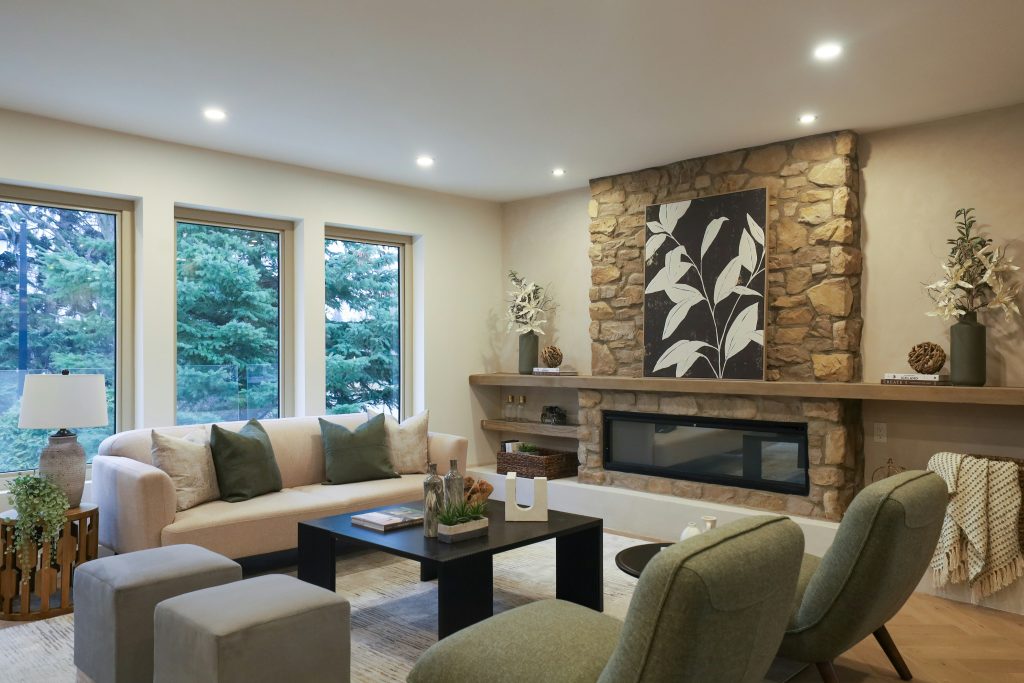
Updating your home’s lighting is one of the most effective ways to refresh your space without a full renovation. Among the various options available, an LED pot light installation stands out as a top choice for homeowners looking to boost their property’s market appeal. Modern buyers look for move-in-ready features, and bright, well-placed recessed lighting often tops their wishlist.
Why Lighting Matters for Resale
First impressions are everything in the London real estate market. A dimly lit room feels smaller and less welcoming than it actually is. Pot lights solve this by tucking the light source into the ceiling, which draws the eye upward and makes rooms feel taller.
When you choose professional lighting installation, you aren’t just adding bulbs. You are creating a mood that helps a potential buyer envision their life in that space. According to experts at The Spruce, smart interior upgrades like modern lighting provide significant ROI because they impact every room’s visual quality simultaneously.
Solving the “Swiss Cheese” Ceiling Fear
One of the biggest hurdles for homeowners is the fear of damage. We often hear from clients who worry that their ceiling will end up looking like Swiss cheese during the process. This is a valid concern if you hire an amateur, but a professional recessed lighting contractor uses a different approach.
Licensed electricians use specialized tools like long-range flex bits and fish tapes. These tools allow us to run wires through joists with surgical precision. Most installations only require the hole where the light itself sits. This means no massive drywall repairs and no weeks of sanding dust coating your furniture.
The Importance of Proper Layout
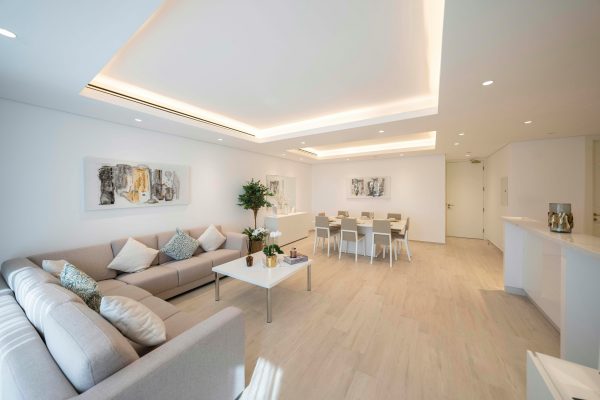
If holes are cut randomly, the ceiling looks cluttered and the light distribution feels off. A professional layout takes into account the “beam angle” of the LED. We calculate the distance between fixtures to ensure the light pools overlap perfectly. This eliminates the dark corners that make a room feel unfinished or “choppy.”
Fixing the Lighting “Temperature” Confusion
The “temperature” of a light bulb is measured in Kelvins (K). This is where many DIY projects go wrong. Have you ever walked into a house where the kitchen glows a harsh, surgical blue? That is likely 5000K or 6000K lighting, which can feel cold and uninviting.
For most residential spaces in Canada, we recommend a range between 3000K and 4000K.
- 3000K (Warm White): Best for bedrooms and living rooms. It feels cozy and mimics traditional incandescent bulbs.
- 4000K (Cool White): Ideal for kitchens, bathrooms, and home offices. It is crisp and clean, making it easier to see while cooking or working.
Many modern LED units now come with “selectable” switches. This allows you to toggle the temperature during the installation. This flexibility is a massive selling point for resale, as it allows future owners to adjust the vibe of the room to their preference.
Eliminating Spacing and Shadow Issues
Poorly placed pot lights create “hot spots” on the floor and deep shadows on the walls. This often happens when lights are placed too close to a wall or directly over a seating area.
Kitchen Lighting Logic
In a kitchen, shadows are more than an aesthetic problem; they are a safety issue. If your pot lights are behind you while you stand at the counter, you will be working in your own shadow. We place lights specifically over work surfaces and islands. This ensures that the light falls in front of you, providing clear visibility for meal prep.
Living Room Balance
In living areas, the goal is “ambient” light. We avoid placing lights in a perfect, rigid grid if it doesn’t match the room’s flow. Instead, we focus on perimeter lighting that washes the walls with light. This makes the room feel wider and provides a beautiful backdrop for artwork or family photos.
Energy Efficiency and the Ontario Climate
In London and the surrounding areas, we deal with extreme temperature swings. Older pot lights were notorious for “leaking” air. Because they weren’t sealed, the warm air you paid to heat would escape into the attic, while cold drafts would pour down in the winter.
Modern LED pot light installation uses Airtight and IC-Rated (Insulation Contact) fixtures.
- IC-Rated: This means the fixture is safe to be in direct contact with your attic insulation. It won’t overheat or pose a fire hazard.
- Airtight: These units are sealed with gaskets. They act as a barrier, keeping your conditioned air inside your home where it belongs.
By choosing these fixtures, you are lowering your London Hydro or Enbridge bills while also making the home more attractive to energy-conscious buyers.
The Cost of Professional vs. DIY
It is tempting to buy a 10-pack of cheap lights from a big-box store. However, those kits often lack the build quality of professional-grade LEDs. Cheap drivers (the part that powers the LED) tend to flicker or buzz when dimmed.
A professional contractor provides:
- ESA Certification: We handle the permits and inspections required by the Electrical Safety Authority. This paperwork is crucial when you sell your home.
- Warranty: If a light fails in six months, a pro comes back to fix it.
- Dimmers that Work: Not all LEDs work with all dimmers. We ensure your switches are compatible so you get smooth, flicker-free dimming from 1% to 100%.
Preparing for Your Installation
Before your electrician arrives, think about how you use each room. Do you need a reading nook? Do you want to highlight a fireplace?
The installation process usually follows these steps:
- Consultation: We walk through your home and map out a custom lighting plan.
- Protection: We cover your floors and furniture to manage any minor debris.
- Wiring: We use specialized techniques to pull wires through your existing ceiling structure.
- Finishing: We snap the LED trims into place and install compatible dimming switches.
- Inspection: We ensure everything meets the Ontario Electrical Code.
If you are ready to transform your space, you can contact our team today to discuss a custom plan for your home.
Final Thoughts on Resale Value
In the current real estate market, details matter. A home that feels bright, modern, and energy-efficient will always command a higher price than one that feels dated and dark. By investing in a professional LED pot light installation, you are solving common homeowner pain points while creating a lasting asset. It is an upgrade you get to enjoy every day, and one that pays you back when it is time to move.
FAQs
How many pot lights do I need in a standard room? A general rule is to divide the ceiling height by two. For an 8-foot ceiling, lights should be roughly 4 feet apart. However, this varies based on the brightness of the fixture and the room’s purpose.
Do pot lights cause heat loss in the winter? Old-style “can” lights did, but modern Airtight and IC-rated LED pot lights are sealed to prevent drafts and are safe to be covered with insulation.
Can you install pot lights in a finished basement? Yes. Using specialized “remodel” housings and fishing techniques, we can install lights in finished drywall ceilings with very little disruption.
Do I need a permit for pot light installation in London, ON? Yes. Any new electrical wiring in Ontario requires an ESA (Electrical Safety Authority) permit. Hiring a licensed electrical contractor ensures this is handled correctly.
What is the best colour temperature for a living room? Most homeowners prefer 3000K (Warm White) for living rooms because it creates a cozy, relaxing atmosphere similar to traditional lighting.