Living in London, Ontario means preparing for a variety of weather events. From heavy ice storms in February to sudden summer thunderstorms, our local grid faces constant pressure. When the lights flicker and die, you are immediately faced with a choice. Do you have a system that works for you, or do you have a machine that requires you to work for it?
Reliable electricity is a cornerstone of modern life, impacting everything from food safety to home security. You can read more about the importance of electricity to understand why consistent power is a necessity rather than a luxury. Choosing between a Generac standby unit and a portable model is about more than just budget. It is about how you want to experience the next blackout.
The Reality of Power Outages in Southwestern Ontario
In our region, a power outage is rarely just a minor inconvenience. For many, it represents a threat to the home’s infrastructure. If you have a finished basement, your sump pump is your primary defense against flooding. If the power fails during a heavy downpour, that pump stops. Within hours, a storm can cause thousands of dollars in water damage.
Many homeowners start their search for backup power because they want peace of mind. They want to know that their food won’t spoil and their pipes won’t freeze. However, the method you choose to deliver that power dictates your level of stress during the event. Portable units and standby systems offer two very different lifestyles.
The Portable Generator Experience: The “Midnight Scramble”
Portable generators are common because they have a low entry price. You can buy one at a big-box store and keep it in the garage. But the true cost of a portable unit is measured in effort and anxiety.
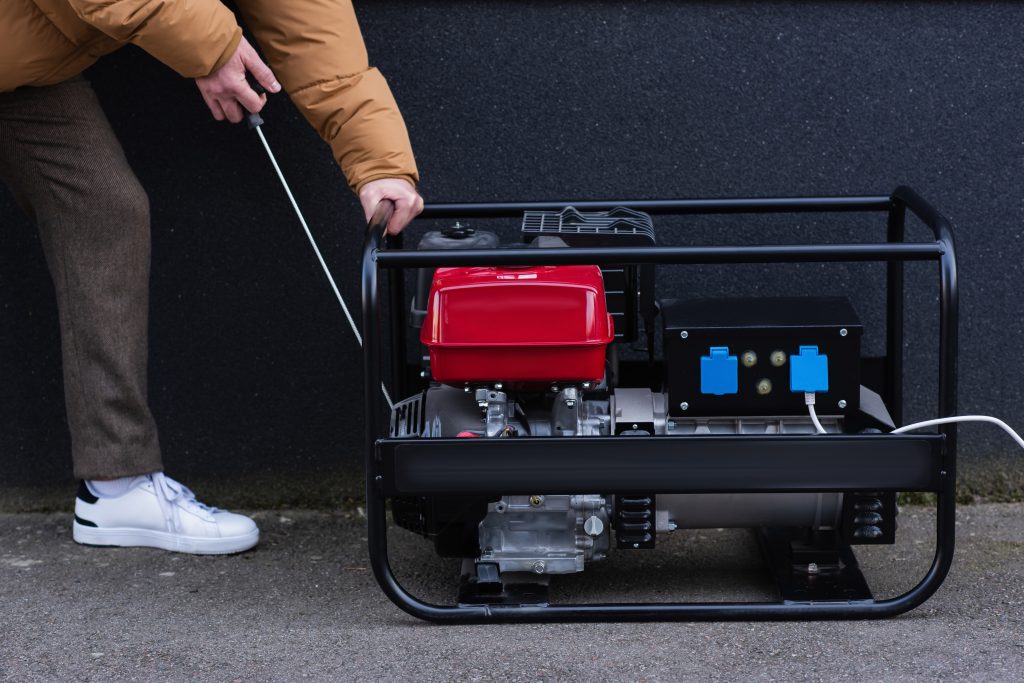
Imagine the “Midnight Scramble.” The power goes out at 2:00 AM during a blizzard. To get a portable unit running, you must dress for the weather and head outside. You have to drag a heavy machine out of the shed and position it away from windows. Then comes the pull-start, which can be difficult in sub-zero temperatures. Finally, you have to run heavy extension cords through a cracked door or window to reach your appliances.

Dealing with the Gas Station Gauntlet
Fueling a portable unit creates a secondary layer of stress known as the “Gas Station Gauntlet.” Most portable models run on gasoline. During a widespread outage, local gas stations may not have power to run their pumps. If they do, the lineups are often hours long.
You also have to consider fuel storage. Storing large quantities of gasoline in a garage is a fire hazard and the fuel can go “stale” if not treated with stabilizers. A whole home generator eliminates this entirely by connecting to your existing natural gas or propane line. You never have to worry about running out of fuel or standing in line at a station.
The Limitations of Choice
When using a portable unit, you are forced into the “Choice of Essentials.” Most affordable portables cannot handle a furnace, a fridge, a sump pump, and lights simultaneously. You have to decide which child’s room gets a space heater and which appliances stay unplugged. This constant management of power loads is exhausting and leaves parts of your home vulnerable.
Why a Whole Home Generator Changes Everything
A standby unit like a Generac is a permanent fixture, much like an air conditioning unit. It sits outside on a concrete or gravel pad and is wired directly into your home’s electrical panel via a transfer switch.
Seamless Integration with Your Home
The biggest advantage is the automation. When the utility power fails, the transfer switch senses the loss immediately. Within seconds, the generator starts and begins supplying power to your home. You don’t have to lift a finger. This is vital for people who travel or own seasonal properties. If you are away on vacation, a standby unit still protects your home from freezing pipes or flooded basements. You can view our specific Generac generators page to see how these systems integrate with your specific floor plan.
Protection for Sensitive Electronics
Modern homes are filled with sensitive technology. From smart fridges to high-end computers, these devices require “clean” power. Many portable generators produce “dirty” power with high total harmonic distortion. This can cause voltage spikes that fry circuit boards in expensive appliances.
Generac units use advanced technology to ensure the power output is stable and safe for your most delicate electronics. You get the same quality of power—or better—than what you receive from the municipal grid.
Comparing Costs: Upfront Investment vs. Long-Term Value
It is true that a standby system costs more upfront than a portable unit. A portable generator might cost $1,000, while a professionally installed standby system starts much higher. However, you must look at the value over ten years.
- Maintenance: Portable units require frequent oil changes and fuel system cleaning. Standby units have self-test cycles that run weekly to ensure the battery is charged and the engine is lubricated.
- Property Value: A permanently installed Generac system is an asset that increases the resale value of your home. It tells future buyers that the home is protected and modern.
- Insurance: Some insurance providers offer discounts on premiums for homes with automatic backup power, especially if a sump pump is present.
Essential Safety Considerations for London Homeowners
Safety is the most important reason to choose a professional installation. Portable generators are the leading cause of carbon monoxide poisoning during outages. People often place them too close to the house or run them in partially enclosed spaces to keep them dry.
A standby generator is professionally vented and installed at a safe distance from all windows and doors. Furthermore, it eliminates the risk of “backfeeding.” Backfeeding occurs when a homeowner tries to plug a generator into a wall outlet, which can send electricity back into the utility lines and potentially injure utility workers. J.D. Patrick Electric ensures every installation meets the highest safety standards in Ontario.
Choosing the Right Solution for Your Family
If you only need to keep a single lamp and a small fan running, a portable unit might suffice. But if you want to maintain your lifestyle, protect your property, and avoid the physical toll of a manual setup, a standby system is the clear winner.
Don’t wait for the next storm to realize you are unprepared. The peace of mind that comes with an automatic system is priceless. You can contact us today to schedule a site assessment. We will look at your electrical panel, your fuel source, and your power needs to recommend the perfect fit.

Quick Comparison Table
| Feature | Portable Generator | Whole Home Generator |
| Startup | Manual (Pull or Button) | Automatic (10 Seconds) |
| Fuel Source | Gasoline (Manual Fill) | Natural Gas / Propane |
| Sump Pump Support | Only if manually connected | Always protected |
| Electronics Safety | Variable (Can be risky) | High (Clean Power) |
| Home Value | No Change | Increases Value |
FAQs
How long can a whole home generator run?
As long as your natural gas or propane supply is active, a standby generator can run for weeks. They are designed for extended use during major grid failures.
Does a Generac generator need oil changes?
Yes. Just like a car, the engine needs maintenance. We recommend a professional service after every 100 to 200 hours of run time or at least once per year.
Can a portable generator power my whole house?
Rarely. Most portable units do not have the wattage to start large motors like central air conditioners or well pumps. You would need a very large, expensive portable unit and a professional manual transfer switch to even attempt it.
Is it loud?
Modern Generac units are surprisingly quiet. They are roughly as loud as a standard central air conditioning unit and much quieter than an open-frame portable generator.